
In March 2026, the Nightspire ransomware group claimed an attack on 11th Street Veterinary Hospital and said it had taken client and operational data. This isn’t the first veterinary practice to get hit, and it won’t be the last. In a typical attack, one click from a staff member opens the door to attackers who encrypt patient records, steal client information, and demand payment to restore operations.
Your practice is not too small to be a target. It may be exactly the right size.
Why Veterinary Practices Are Prime Targets for Ransomware Groups
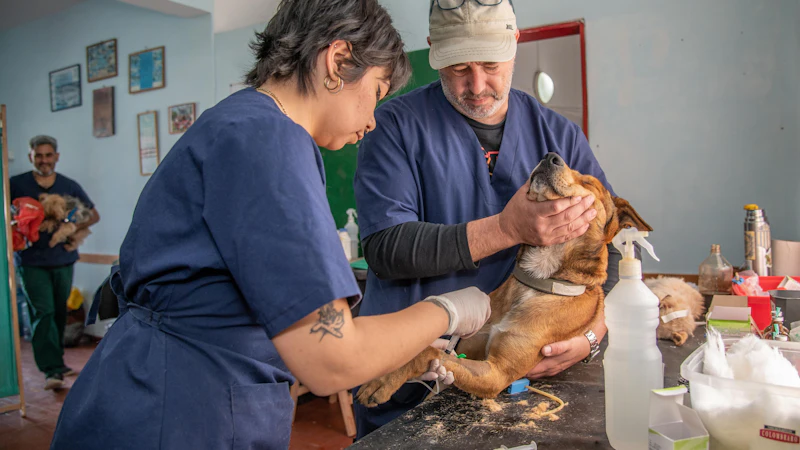 Ransomware groups do not pick victims at random. They look for organizations that hold sensitive data, run on tight margins, and cannot afford to be offline for long. Veterinary practices check every box.
Your practice stores client names, addresses, payment information, and pet health records. That data has real value on the dark web. At the same time, most veterinary practices operate with small administrative teams and limited IT support. There is rarely a dedicated security person watching for threats. That gap is exactly what attackers exploit.
Veterinary practices also tend to run older software. Practice management systems like Cornerstone, AVImark, and ezyVet are critical to daily operations, but updates and patches often get delayed when the schedule is full and the team is stretched thin. Outdated software has known vulnerabilities. Ransomware groups know those vulnerabilities too.
There is another factor: urgency. When a sick animal needs care, staff move fast. That urgency creates the conditions where a phishing email gets clicked without a second look. Attackers know this. They craft emails that look like appointment requests, supplier invoices, or lab results, exactly the kind of messages your front desk opens dozens of times a day.
What Happens When Ransomware Hits: Downtime, Data Loss, and Client Trust
Picture this. A 15-person veterinary practice arrives on a Monday morning to find their patient management system completely encrypted. Every appointment for the week is inaccessible. Client records, medical histories, vaccination logs: all locked. The attackers are demanding $50,000 to restore access. Recovery takes two weeks and costs $75,000 in lost revenue and IT remediation.
The numbers are illustrative, but the pattern is real for practices of every size.
The financial damage is only part of the story. The harder hit is often to client trust. Pet owners expect their personal information to be protected. When a breach happens, you are legally required to notify affected clients. That notification triggers questions, complaints, and in some cases, clients who never come back.
Regulatory exposure adds another layer. Depending on your state and the nature of the data involved, a breach can trigger reporting requirements and fines. If your practice processes payments, a breach may also violate your payment card agreements, creating additional liability.
The practices that recover fastest are the ones that had a plan before the attack. The ones that suffer the most are the ones that assumed it would not happen to them.
How BlueKey Has Protected Similar Practices from Ransomware Attacks
BlueKey works with veterinary practices across the nation to close the gaps that ransomware groups look for. The work is not complicated. But it has to be done consistently, and it has to be done before an attack, not after.
When BlueKey partners with a veterinary practice, the first step is a full assessment of the current environment. That means looking at every device connected to the network, every user account, every piece of software running in the practice. Most practices are surprised by what that assessment turns up, old accounts that were never deactivated, software that has not been updated in months, backup systems that have not been tested in years.
From there, BlueKey builds layered protection. That includes email filtering to catch phishing attempts before they reach your staff, endpoint protection on every device, and multi-factor authentication on every account that touches client data. Backups are configured to run automatically and stored in a way that ransomware cannot reach them.
Staff training is part of the picture too. The goal is not to make your team into IT experts. It is to give them the habit of pausing before they click, and knowing what to do if something looks wrong.
Your 4-Step Ransomware Prevention Strategy
You do not need a large IT budget to protect your practice. You need the right three things in place.
Step 1: Secure your email.
Most ransomware enters through email. A filtered email system blocks the majority of phishing attempts before they reach your inbox. Combined with staff awareness of what a suspicious email looks like, this single step eliminates the most common entry point.
Step 2: Back up everything, and test those backups.
A verified, recent backup is the difference between a two-hour recovery and a two-week shutdown. Backups should run daily, be stored off-site or in a separate cloud environment, and be tested regularly to confirm they actually work. Many practices discover their backups are incomplete or corrupted only when they need them most.
Step 3: Control who has access to what.
 Not every staff member needs access to every system. Limiting access by role means that if one account is compromised, the attacker cannot move freely through your entire network. Combined with multi-factor authentication, access controls significantly reduce the damage any single breach can cause.
These three steps will not make your practice invulnerable. But they will make you a harder target, and they will limit the damage if an attack does get through.
Step 4: Put a SOC and EDR on the network
The first three steps reduce your risk. A Security Operations Center (SOC) and Endpoint Detection and Response (EDR) catch what gets through anyway. EDR runs on every device in your practice, watching for the behaviors ransomware exhibits: unusual file encryption, suspicious processes, lateral movement between machines, and isolating the device before damage spreads. A SOC is the team of analysts watching those alerts around the clock. When something looks wrong at 2 a.m. on a Saturday, someone is already responding before your staff arrives Monday morning. For most veterinary practices, building this in-house is not realistic. A managed SOC and EDR service gives you enterprise-grade detection without an enterprise-sized IT team.
Frequently Asked Questions
How do ransomware groups specifically target veterinary practices?
Ransomware groups often purchase lists of businesses by industry and size. They look for practices running outdated software, with no public record of strong IT infrastructure. Phishing emails are then crafted to look like routine veterinary communications (appointment requests, lab results, or supplier invoices) to increase the chance a staff member clicks.
What is the average cost of recovering from a ransomware attack?
According to Sophos’s State of Ransomware 2025 report, the average cost to recover from a ransomware attack was $1.53 million, down from $2.73 million in 2024. For small practices, even a fraction of that figure can be financially devastating. The ransom payment itself is often the smallest part of the total cost.
Can cyber insurance cover ransomware attacks on veterinary practices?
Cyber insurance can cover ransom payments, recovery costs, and legal fees, but coverage depends heavily on whether your practice meets the insurer’s security requirements at the time of the attack. Many policies now require multi-factor authentication, documented backup procedures, and staff training as conditions of coverage. A practice that has not met those requirements may find a claim denied. BlueKey can help you document and implement the controls your insurer requires.
Don’t wait for an attack to happen. Contact the experts at BlueKey IT to secure your network before ransomware finds you.
Sources
- 11th Street Veterinary Hospital ransomware claim (March 7, 2026): Ransomware.live victim record
- Sophos State of Ransomware 2025: sophos.com/en-us/content/state-of-ransomware-2025
- Cybersecurity and Infrastructure Security Agency (CISA) ransomware guidance: cisa.gov/ransomware